
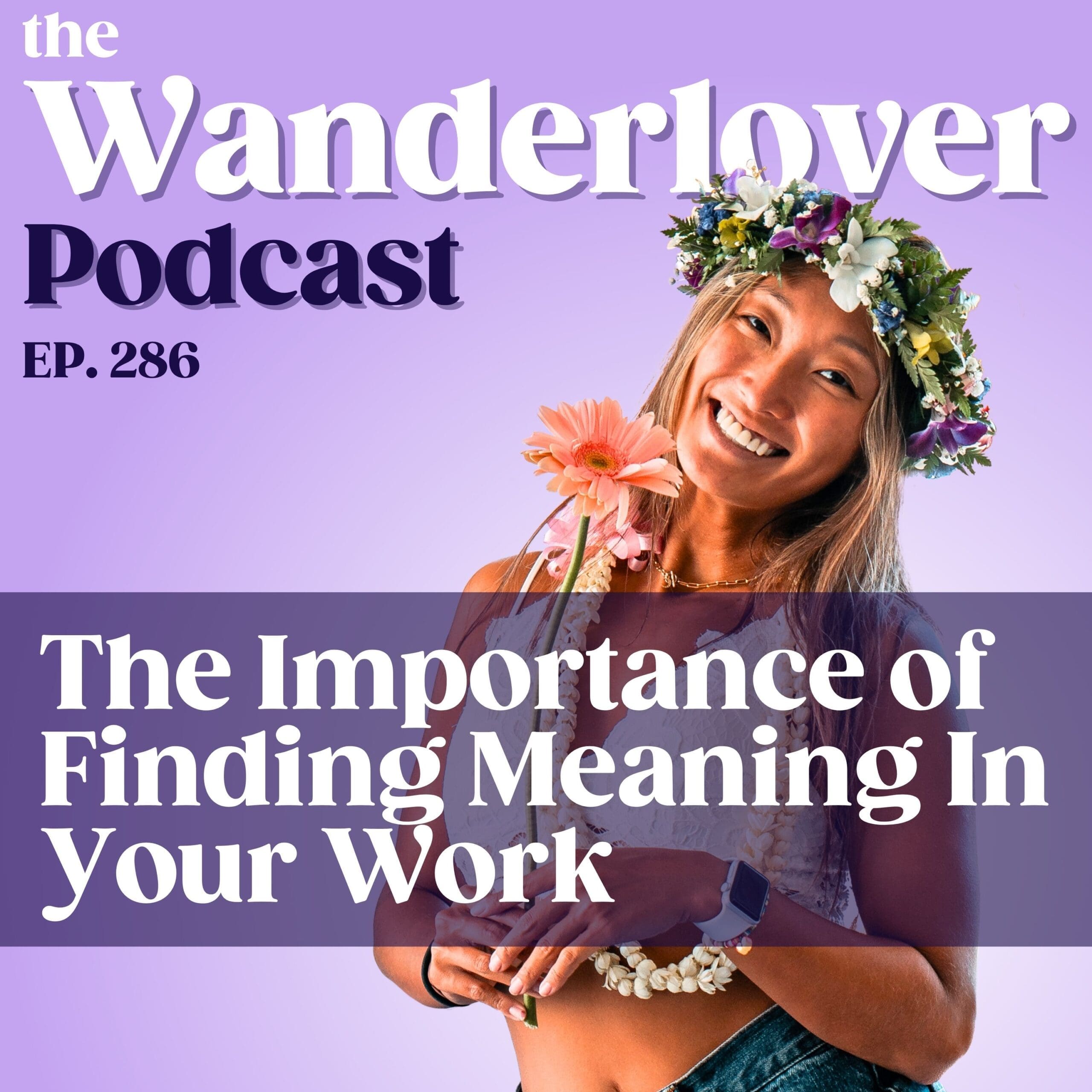
Tune in or read the blog version below!
Hello, my loves, welcome back to The Wanderlover podcast.
I don’t know if any of you do this, but I regularly check in with my husband and ask him a simple question: On a scale of one to ten, what would you rate your life right now? I usually answer it too. Sometimes I ask friends or clients this question as well because it always opens up such an interesting conversation about what people value, what feels fulfilling, and what they believe is missing from their lives.
What’s fascinating is that everyone’s scale is different. Some people answer based on how they feel that day, while others answer based on the broader chapter of life they’re in. But almost every time, the follow-up question becomes: Why isn’t it a ten?
Recently, my husband and I both rated our lives a nine. And after asking this question for years — to myself, my friends, and my clients — I’ve realized there’s a direct correlation between how highly you rate your life and how much meaning you feel in it.
Because most of us spend such a significant portion of our lives working, it’s incredibly important that your work has meaning.
Viktor Frankl and Man’s Search for Meaning
This conversation brought me back to one of the most impactful books I’ve ever read: Man’s Search for Meaning by Viktor Frankl. If you’ve never read it, I highly recommend it. It truly changed the way I think about life.
Frankl was a psychiatrist and neurologist in Vienna when the Nazis rose to power. He lost everything — his pregnant wife, his parents, his brother — and was sent to concentration camps during the Holocaust. In his memoir, he documented what he experienced and what he observed about human psychology under unimaginable suffering.
The first part of the book focuses on life inside the camps and the trauma survivors carried even after liberation. The second part introduces a concept Frankl developed called logotherapy, which is based on the idea that humans are primarily motivated by their search for meaning.
According to Frankl, when we lack meaning, we become more vulnerable to emptiness, depression, boredom, and existential crises.
Why External Success Isn’t Enough
Of course, I’m not comparing modern life to the horrors of a concentration camp. But what I find so fascinating is this idea that someone can have absolutely everything stripped away from them and still find a reason to live. Meanwhile, so many of us today live in abundance, have opportunities, freedom, and comfort — yet still feel deeply unfulfilled inside.
That realization changed everything for me because it means happiness has very little to do with your external circumstances.
When I worked in New York City, I had the “perfect” life on paper. I had the job, the credentials, the apartment, the friends, the salary, and the success. But if you had asked me back then to rate my life, it would not have been a nine.
Everything around you can look perfect while you still feel empty inside.
The Three Ways We Find Meaning
Frankl believed meaning can be found through three main avenues.
1. Creating or Accomplishing Something
The first is through creating, building, or contributing something meaningful. This could be your work, your art, your business, or anything that allows you to create value in the world.
2. Experiencing Something or Loving Someone
The second is through relationships, connection, love, nature, friendship, and family. Meaning often comes from the people we share our lives with and the experiences that make us feel deeply alive.
3. The Attitude We Take Toward Suffering
The third — and perhaps most profound — is the attitude we choose when facing unavoidable suffering.
We all experience grief, heartbreak, illness, uncertainty, fear, loss, or difficult seasons in life. When those things cannot be changed, we still have the freedom to choose how we respond internally. And according to Frankl, that response itself can create meaning.
For example, someone who experiences loss may become more compassionate toward others going through grief. A parent sacrificing sleep and comfort to lovingly raise a child can find meaning through that sacrifice. And many of my clients have found meaning by becoming stronger, more resilient versions of themselves during difficult chapters of life and business.
The meaning comes from who you become through hardship and what it teaches you.
Frankl observed that prisoners who held onto a sense of purpose were often more likely to survive mentally and physically.
Why Meaning Matters in Business
This is exactly why finding meaning in your business matters so much.
Your “why” — the reason you want to start your business, make money, or build a life of freedom — is what carries you through the hard seasons. It’s what helps you survive the moments of uncertainty, rejection, fear, and failure.
This is also why I talk so much about intentional life design. You are not meant to simply go through the motions, chasing money or following someone else’s definition of success.
You have the power to intentionally design your work, your routines, your lifestyle, and your business around what genuinely matters to you.
For me, that meaning now comes from my family, from the work I do, from helping other people build freedom-based businesses, and from creating a life aligned with my values. That’s why my husband and I consistently rate our lives at nines and above.
Stop Building a Life Around Escaping Work
Most people treat work as a means to an end. You work to make money, you make money to buy freedom, and then you hope freedom will finally make you happy.
But if meaning is the primary human driver, then a life built around escaping work — rather than finding meaningful work — will always feel hollow, regardless of how much money you make or how many countries you travel to.
Instead, start with what genuinely matters to you. Focus on the transformation you actually care about helping other people achieve. Then build your products, content, offers, and systems around that mission.
When you do that, revenue becomes confirmation that your work is creating value — not the sole reason you show up every day.
You become a meaning-first creator. Someone who stays energized through the ups and downs of life, whose audience feels the authenticity behind the work, and whose business compounds over time because it’s built on purpose.
Final Thoughts
If there’s one thing I hope you take away from this, it’s this: your happiness is not determined by your external achievements alone. Meaning matters. Purpose matters. The life you intentionally create matters.
So ask yourself honestly: What gives my life meaning right now?
And if the answer feels unclear, maybe that’s your invitation to start designing a life and business that feels more aligned, more intentional, and more deeply fulfilling.
Read Next
The 5 Books That Have Changed My Life
7 Limiting Beliefs That Are Holding You Back as an Entrepreneur
Feeling a Shift? This Is Your Sign to Do Things Differently
How to Attract Money for Wealth and Abundance
5 Life Principles I Live By as an Entrepreneur
Comparison is the Thief of Joy
How to Change Your Life in 6 Months