Tune in or read the blog version below!
Resources mentioned:
Riverside.fm: Online Recording Studio
Libsyn: Best Podcast Hosting
The microphone I use to record
Quick Links
✧ Join The Wanderlover Coaching Group
✧ Download Your FREE 0 to $100K Game Plan
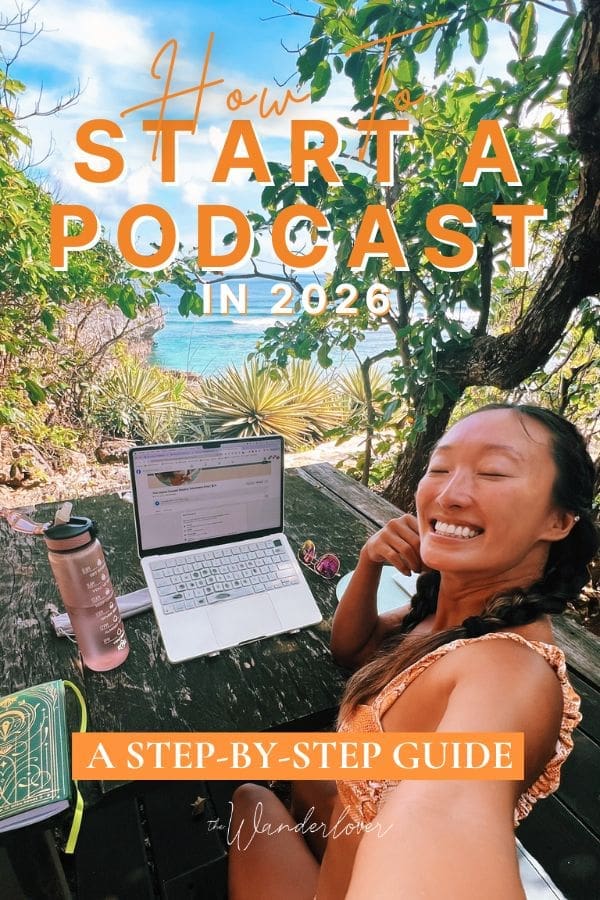
How to Start a Podcast in 2026
If you’ve been thinking about starting a podcast but feel overwhelmed by the tech, the strategy, or where to even begin, this episode is going to simplify everything. I’m going to walk you through exactly how to start a podcast in 2026, step by step, in a way that’s sustainable, aligned, and actually useful for your life or your business.
I started The Wanderlover Podcast in 2020 (check out the first episode here!), and it has been one of the most rewarding aspects of my business. I’ve also helped a handful of clients launch successful podcasts over the years. The reason we all love podcasting is because we can pack so much into 20 to 30 minutes, and your message becomes far more effective than on short-form content platforms like Instagram or TikTok.
It’s also really special to be able to speak to someone directly. It creates more of a friend-to-friend feel. Podcasting in 2026 is very different from when I started. You don’t need a huge audience, you don’t need expensive equipment, and you definitely don’t need to overcomplicate it. What you do need is a simple setup and a repeatable process you can actually stick to.
Decide the Purpose of Your Podcast
Let’s start from the very beginning. The first step is deciding the real purpose of your podcast. Before you buy a microphone or think about a name, you need to be clear on why this podcast exists.
Is it to support your business? Is it just a hobby? Is it to build authority in your industry, create long-form content you can repurpose, or simply share conversations and ideas you care about?
A podcast without a clear purpose quickly becomes inconsistent. You end up scrambling together episodes, and it becomes confusing why you’re even recording. When you know the role your podcast plays in your life or your brand, every decision becomes easier because you have that North Star guiding you.
Choose a Clear Podcast Concept
Once you know the purpose, the next step is choosing a clear podcast concept. This is where most people get stuck because they try to be too broad.
Your podcast should answer one simple question: who is this for, and what problem or desire does it support? You don’t need a niche that feels boxed in, but you do need a central theme and content pillars.
For example, The Wanderlover Podcast centers around online entrepreneurship and life design. Under those pillars, we talk about mindset, marketing, motherhood, and the digital nomad lifestyle. This clarity helps listeners immediately know whether the podcast is for them.
You also want to think long-term. What can you talk about for years and years? What could you realistically record 100 or even 200 episodes on? You don’t want something that boxes you into one small segment that you’ll quickly run out of ideas for.
Naming Your Podcast
Now let’s talk about the name. In 2026, podcast discoverability still heavily favors clarity over creativity. A name that clearly signals what your show is about will outperform something clever but vague, especially if you already have a brand.
Using your brand name or your name plus a clear descriptor works extremely well. Think long-term here too. Your podcast name should still make sense two or three years from now, even if you’re in a different chapter. That’s why I recommend tying it to your brand or your name so it can evolve with you.
Decide on Your Format
Next, decide on your format. This is a very practical decision. Will your episodes be solo? Interviews? Or a mix of both? Will you post weekly or bi-weekly?
Choose a posting schedule that feels good with everything else you have going on right now. Will your episodes be highly produced, or more conversational? Choose a format that fits your current capacity, not your ideal future self.
Consistency matters more than complexity. A simple solo podcast recorded once a week will outperform an overly ambitious format you can’t maintain. Done is better than perfect, and the goal is to make starting feel easy, not overwhelming or daunting.
Equipment
Next is equipment, and this is where people tend to overthink. You truly do not need to think about this much at all. You can absolutely start with minimal gear, even just your laptop. You don’t need a full studio, a microphone, or headphones to begin. Of course, it’s great if you have them, but they are not required. You don’t need a mixer or fancy soundproofing either.
Record in a quiet space, close your windows, turn off your AC and fans, and focus on clear audio. You can always upgrade later once the podcast proves itself and you understand your workflow better. If you’re interested, this is the microphone that I use.
Recording and Editing Your Podcast
For recording software, you can record directly onto your computer using simple audio software. I personally use and recommend Riverside FM because it records high-quality audio locally and makes repurposing content easier. Think of it as an all-in-one studio you can access through a web app.
Once your audio is recorded, you’ll need basic editing. Editing does not mean perfection. Your goal is simply to remove long pauses or obvious mistakes, if at all. You do not need to edit out every “um” or pause. Overly polished podcasts often feel less human.
If editing feels overwhelming, you can skip it entirely or outsource it later. It’s still helpful to understand the basics yourself first. Again, done is better than perfect.
Hosting and Distribution
Next, let’s talk about hosting. A podcast host is where your audio files live and how your podcast gets distributed to platforms like Spotify and Apple Podcasts.
Hosting platforms in 2026 are very beginner-friendly. Choose one reliable host, set it up once, and you’re done. We use and recommend Libsyn. Your host automatically distributes your podcast to all listening platforms. You don’t upload episodes individually to every app. You simply upload, publish, and it distributes everywhere.
Cover Art and Launch Prep
Before launching, you’ll need cover art. Keep this simple and legible. Your podcast cover needs to be readable at a very small size on someone’s phone. One clear image, your podcast name, and strong contrast matter more than design trends.
You can use Canva and start with one of their templates. You can include a photo of yourself or keep it text-based. This doesn’t need to be perfect, it can always change in the future.
Another important step many people skip is planning your first episodes. Before launching, outline at least five to ten episode ideas. This removes pressure and prevents you from launching strong and then disappearing.
Your first episodes should clearly communicate who the podcast is for, what listeners can expect, and why they should keep listening. When you launch, I recommend starting with at least three episodes so listeners can binge and platforms can understand your podcast faster.
Sustainability, Promotion, and Growth
Once your podcast is live, the focus shifts to sustainability. Decide how and when you’ll record. Batching recording sessions works extremely well. For example, record four episodes in one session and schedule them out.
This reduces mental load and helps you stay consistent even during busy weeks, travel, or family time. Promotion in 2026 is also less about pushing links and more about repurposing content.
Your podcast should be the long-form foundation that feeds short-form content on Instagram, TikTok, and YouTube Shorts. One episode can easily turn into multiple pieces of content without extra effort. Work smarter, not harder.
Final Thoughts
Podcast growth is slower, but it’s deeper. Podcast listeners are loyal and engaged. Focus on serving the listener, improving clarity, and staying consistent. Monetization and growth come as a byproduct of trust.
If you’ve been waiting for a sign to start your podcast in 2026, this is it. Start simple and let the podcast grow with you through many chapters of your life.
If this episode helped you, please like, comment, and share it with someone who’s been overthinking starting their podcast. I’ll see you in the next episode. Have an amazing week, my loves.
Pin On Pinterest
Read Next
The Exact Game Plan to Hit Your First $100K
8 Proven Online Business Ideas That Allow You to Travel the World
The ONE THING To Focus On If You’re Struggling With Getting Started
The Wanderlover Story: From 9-5 to Full-Time World Traveling Entrepreneur
How to Choose the Right Online Business Model for You
Essential Tools and Platforms to Launch Your Online Business
10 Reasons Why Most Entrepreneurs Will Fail
My Signature Online Business Model
When and How to Quit Your Corporate Job
Building Passive Income Streams: The Pyramid Parable
How to Start a Podcast With No Audience
How to Make $10k in A Month: A Complete Guide
Starting from Scratch: What I Would Do If I Had 0 Followers and 0 Revenue